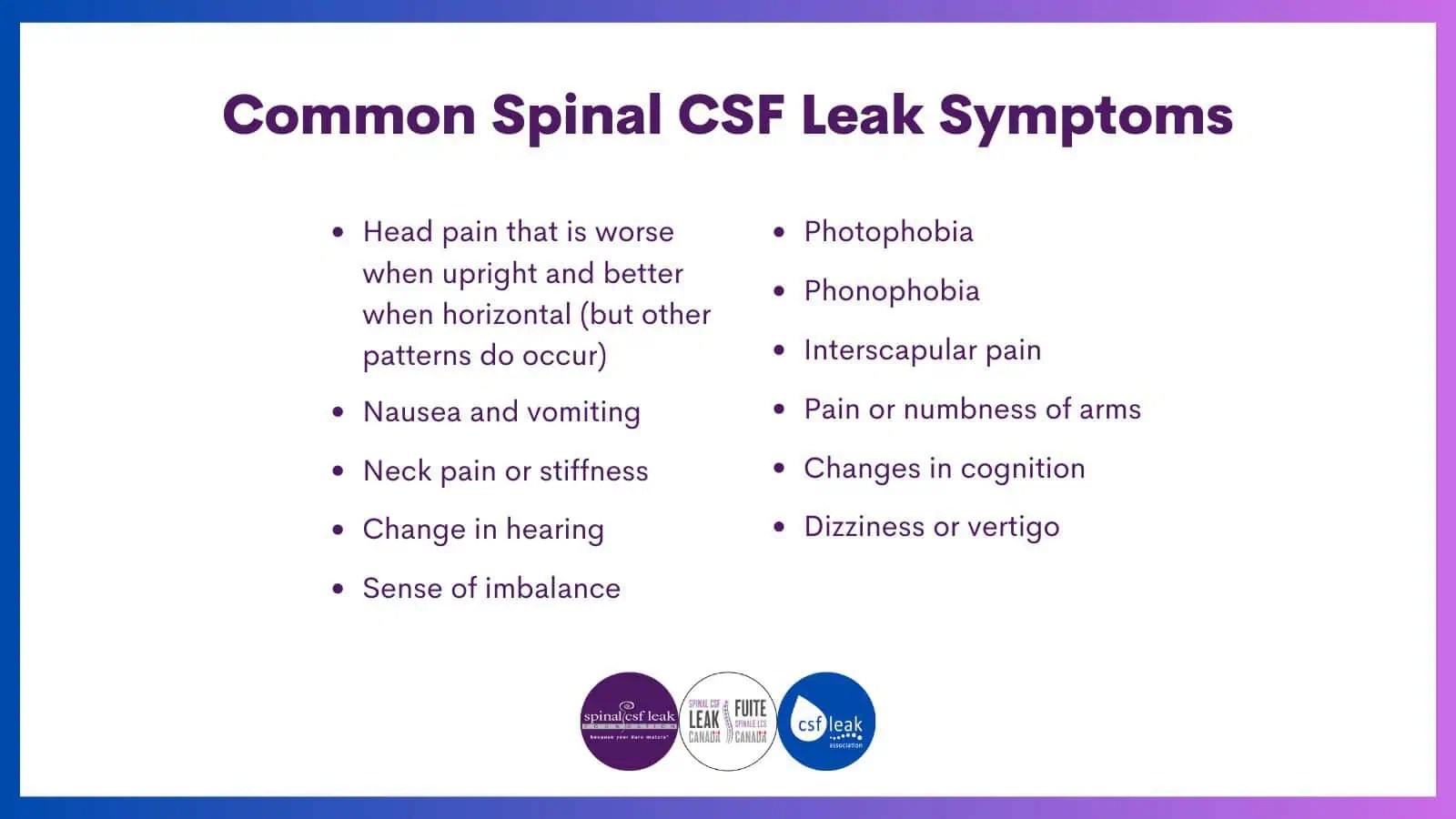
The most common symptom of a spinal csf leak is a headache Cerebrospinal fluid (csf) is a watery fluid that continually circulates through the brain’s ventricles (hollow cavities) and around the surface of the brain and spinal cord A cranial csf leak occurs in the skull, and often causes symptoms such as clear fluid leaking from the nose or ear
Cerebrospinal Fluid (CSF) Leak: Symptoms, Types & Treatment
Some csf leaks may heal with bed rest and other conservative treatment
Many csf leaks need a patch to cover the hole or surgery to repair the leak.
Cerebrospinal fluid (csf) leak occurs due to a defect in the dura and skull base Trauma remains the most common cause of csf leak However, a significant number of cases are iatrogenic, and result from a complication of functional endoscopic sinus. Historically, experts believed csf leak was relatively rare
In a study published in cephalalgia, cedars‑sinai researchers refuted this theory, reporting that the annual incidence of csf leak is 4 per 100,000 people, which makes it more common than bacterial meningitis and multiple sclerosis Still, csf leak remains largely underrecognized. Cerebrospinal fluid surrounds and protects the brain and spinal cord, maintaining stable pressure and acting as a cushion against injury When there is a breach in the dura mater, csf can leak out, causing a drop in intracranial pressure, which leads to a range of symptoms, particularly positional headaches that worsen when.

A csf leak is relatively rare, with an estimated prevalence rate of 1 in 50,000 individuals
The most common symptom of a csf leak is a persistent headache that worsens when upright and improves by lying down Other symptoms may include nausea, memory difficulties, cranial nerve dysfunction, neck pain, and shoulder blade pain.