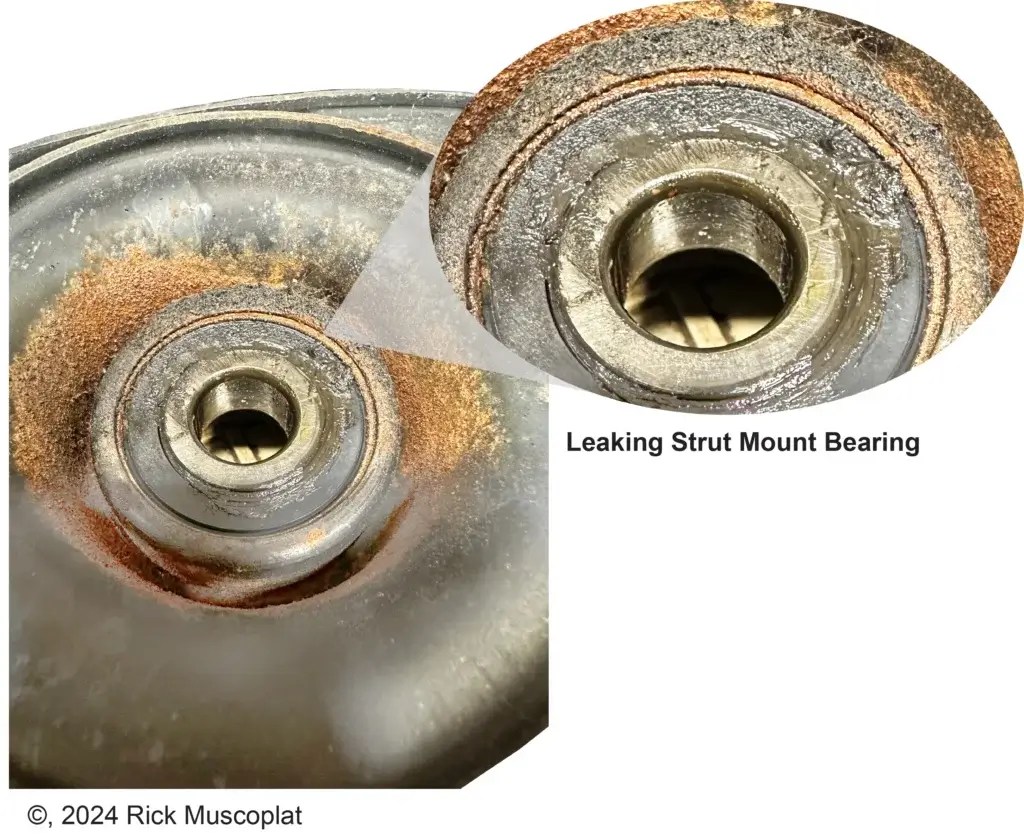
When a vehicle traverses over bumps, potholes, or rough road conditions, that piston is pushed against that hydraulic fluid that can force oil to leak out of the strut if the seal is bad. Leaking fluid doesn't necessarily mean shock or strut failure The vehicle suspension system is engineered to mitigate the impact of bumps and shocks, thus guaranteeing a comfortable driving experience
What Causes a Popping Noise When Turning at Slow Speeds? — Ricks Free
Yet, when strut leakage manifests, it can lead to a malfunctioning system, resulting in a bumpy ride and potentially hazardous driving conditions
It is imperative to identify and rectify leaky struts to preserve the integrity of the suspension system
A leaking strut can wreak havoc on your car’s suspension, affecting its handling and comfort If you notice signs of a leaking strut, it’s crucial to address the issue before it worsens Struts play a vital role in shock absorption and vehicle stability In this guide, we’ll help you spot the signs of a leaking strut, uncover what causes it, and show you how to fix the issue for a.
Why are leaky struts a problem Struts contain hydraulic fluid that helps them absorb impact When they start leaking, they lose effectiveness This can make your ride feel rough and bumpy because your car won’t absorb shocks as well

You might also notice that your car feels unstable, especially when turning or stopping.
So, exactly how long you can drive with broken struts depends on how bad the struts are If you notice only a minor oil leak on the strut and no handling differences, you can drive for another week or two before they blow out. Struts can fail for a number of reasons such as road conditions and where a vehicle is driven Driving on bad struts is a safety hazard
If you have a car with damaged or leaking struts, they should be replaced as soon as possible Why struts leak fluid inside the macpherson strut a shock absorber absorbs the force from the impact of the tires hitting the ground